
Inventory verification is one of the most critical processes for businesses handling physical stock across warehouses, retail stores, manufacturing plants and distribution centers. Accurate inventory records directly impact profitability, statutory compliance, operational efficiency and financial reporting.
For retail chains and multi-location businesses, inventory mismatches can lead to stock leakage, audit qualifications, incorrect valuation, shrinkage losses and poor decision-making.
At AuditBridge, we follow a structured, technology-enabled inventory verification methodology designed to deliver accurate, reconciliation-ready and audit-friendly stock records.
This guide explains our complete step-by-step inventory verification process used across retail chains, warehouses, manufacturing units and distribution businesses.
What Is Inventory Verification?
Inventory verification is the process of physically counting, validating and reconciling stock available at warehouses, stores or business locations with ERP records, stock registers or accounting books.
The objective is to ensure:
- Accuracy of stock records
- Identification of shortages and excesses
- Better inventory controls
- Audit-ready documentation
- Correct stock valuation
- Prevention of inventory leakage
Inventory verification is commonly performed for:
- Statutory audits
- Internal audits
- Management reporting
- Year-end closing
- ERP cleanup projects
- Warehouse control improvement
- Stock reconciliation exercises
Why Inventory Verification Is Important in 2026
Businesses today operate with large SKU volumes, multiple storage locations and real-time inventory movement. Manual stock controls alone are no longer sufficient.
Modern inventory verification helps organizations:
| Benefit | Impact |
|---|---|
| Accurate stock records | Better financial reporting |
| Reduced stock leakage | Improved profitability |
| Faster audits | Reduced compliance risk |
| Better warehouse control | Improved operational efficiency |
| Identification of obsolete stock | Better inventory planning |
| ERP reconciliation | Clean and reliable data |
For retail chains and distribution businesses, inventory verification also improves supply chain visibility and location-wise accountability.
Step-by-Step Inventory Verification Methodology
Step 1: Planning & Preparation
Before physical verification begins, a detailed planning process is performed to ensure smooth execution.
Our Pre-Verification Planning Includes
- Understanding stock nature:
- Raw Material (RM)
- Finished Goods (FG)
- Work-in-Progress (WIP)
- Trading inventory
- Retail inventory
- Identifying all storage areas:
- Warehouses
- Shop floors
- Racks
- Bins
- Yards
- Stores
- Finalizing verification date and cut-off timing
- Defining verification scope:
- SKU-wise
- Bin-wise
- Location-wise
- Ensuring latest ERP stock reports are available
- Allocating teams location-wise
Why Planning Matters
Proper planning reduces:
- Counting duplication
- Missed inventory
- Team confusion
- Operational disruption
- Reporting delays
This stage becomes especially important for large retail chains and multi-location inventory projects.
Step 2: Location Tagging & Rack Number Mapping
Once planning is completed, the next stage involves physical storage mapping and location identification.
What We Do
- Mark every warehouse zone or storage area
- Capture rack, bin and shelf references
- Map aisle and floor locations
- Enter rack numbers into the system
- Create location-based inventory structure
Benefits of Rack Mapping
| Advantage | Business Impact |
|---|---|
| Easy stock traceability | Faster stock identification |
| Better location control | Reduced stock confusion |
| Faster future audits | Reduced verification time |
| Improved accountability | Better inventory discipline |
Location tagging is particularly useful for warehouses with high SKU volumes and frequent stock movement.
Step 3: SKU-Wise Scanning, Counting & System Punching
After storage mapping, physical inventory counting begins using structured SKU-wise scanning methods.
Our Counting Process Includes
- Barcode scanning
- QR code scanning
- SKU-wise counting
- Mobile-based inventory punching
- Real-time data capture
Technology We Use
- Mobile verification applications
- Barcode scanners
- QR-enabled systems
- Scan-based data capture tools
- Structured count sheets
Why Controlled Scanning Is Important
In large warehouses and retail environments:
- Double scanning can happen easily
- Some items may remain uncounted
- High-volume counting may create confusion
- Duplicate entries can distort stock records
Our structured methodology minimizes:
- Duplicate counting
- Missed entries
- Data errors
- Incorrect quantity capture
This helps achieve higher inventory accuracy and reliable audit documentation.
Step 4: Inventory Condition Check & Physical Observations
Inventory verification is not limited to quantity checking alone.
During physical verification, we also review the condition and usability of stock.
Physical Observations Include
- Damaged inventory
- Broken items
- Expired stock
- Slow-moving inventory
- Non-moving inventory
- Wrongly placed stock
- Unidentified inventory without labels
- Improper SKU tagging
Why Condition Checks Matter
Condition analysis helps management:
- Identify inventory losses
- Improve stock rotation
- Reduce obsolete inventory
- Improve warehouse discipline
- Strengthen procurement planning
These observations also support statutory auditors and internal audit teams.
Step 5: Cut-Off Verification Process
Inventory quantities can change continuously due to inward and outward stock movement.
To ensure accurate “as on date” inventory verification, cut-off checks are extremely important.
Our Cut-Off Control Process Includes
- Ensuring dispatch is controlled during counting
- Separately marking inward and outward movement
- Verifying GRN and issue records
- Reviewing movement near cut-off timing
- Matching physical stock with date-specific records
Importance of Cut-Off Checks
Without proper cut-off control:
- Inventory records may become inaccurate
- ERP reconciliation may fail
- Audit differences may increase
- Financial reporting may be affected
A strong cut-off process improves the reliability of inventory verification results.
Step 6: Reconciliation With ERP & Stock Register
After physical counting is completed, the next stage is reconciliation.
Physical quantities are compared with ERP records and stock registers.
Variance Analysis Includes
| Variance Type | Meaning |
|---|---|
| Excess stock | Physical stock greater than book stock |
| Shortage stock | Physical stock lower than ERP stock |
| Wrong SKU mapping | Incorrect item tagging |
| Wrong location mapping | Inventory placed in incorrect location |
| Obsolete stock | Damaged or non-usable inventory |
Reconciliation Benefits
- Identifies root causes of mismatch
- Improves ERP accuracy
- Supports inventory adjustment decisions
- Strengthens internal controls
- Supports audit documentation
This stage is highly important for finance teams, internal auditors and statutory auditors.
Step 7: Final Reporting & Audit-Ready Deliverables
Once verification and reconciliation are completed, detailed reports are prepared.
Deliverables Provided by AuditBridge
- Location-wise inventory summary
- SKU-wise count reports
- Variance quantity reports
- Variance value reports
- Damaged inventory lists
- Obsolete stock analysis
- Slow-moving inventory reports
- Management observations
- Audit-ready documentation
Reports Are Useful For
- Statutory audits
- Internal audits
- MIS reporting
- ERP cleanup
- Warehouse control strengthening
- Inventory adjustment approvals
Structured reporting helps management take faster corrective action.
Technology-Enabled Inventory Verification
Modern inventory verification requires speed, transparency and data accuracy.
AuditBridge uses technology-enabled inventory audit systems for faster and more accurate execution.
Technologies Used
- Mobile-based inventory applications
- Barcode inventory systems
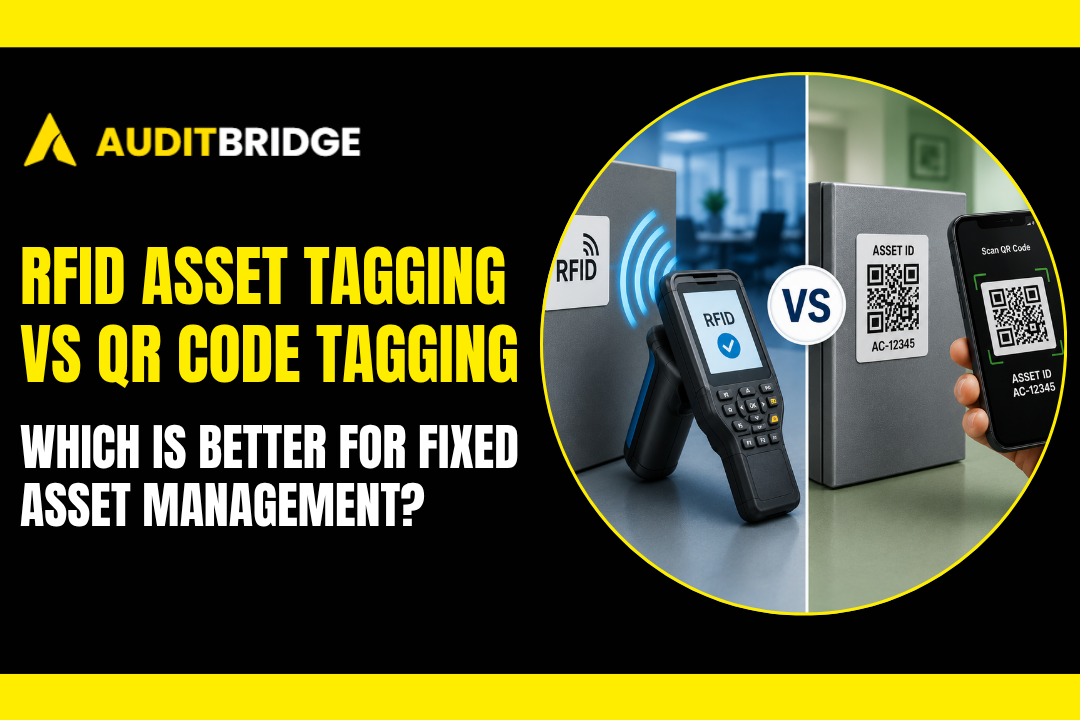
- QR-based inventory verification
- RFID-enabled tagging systems
- Cloud-based reporting systems
- Real-time scan-based inventory tools
Key Benefits of Technology-Based Verification
| Technology Feature | Benefit |
|---|---|
| Real-time data capture | Improved accuracy |
| Barcode scanning | Faster counting |
| QR-based systems | Better traceability |
| Downloadable reports | Easier audit support |
| Location mapping | Better inventory control |
Technology-driven verification significantly reduces manual errors.
Industries We Serve
Our inventory verification services are widely used across multiple industries.
Industries Covered
Retail & Retail Chains
- Apparel stores
- Electronics retail
- FMCG retail chains
- Departmental stores
Warehousing & Distribution
- Distribution centers
- Logistics hubs
- Third-party warehouses
- Multi-location storage facilities
Manufacturing Industry
- Raw material verification
- Work-in-progress verification
- Finished goods verification
- Engineering inventory verification
Trading & FMCG Businesses
- Consumer goods businesses
- FMCG distribution
- Import-export businesses
- Wholesale trading companies
Other Sectors
- Hospitals
- Educational institutions
- Service organizations
- Corporate offices
Inventory Audit vs Inventory Verification
Many businesses use both terms interchangeably, but they are slightly different.
| Inventory Verification | Inventory Audit |
|---|---|
| Physical stock counting | Review of inventory controls |
| Quantity validation | Process and compliance review |
| ERP reconciliation | Internal control assessment |
| Operational focus | Audit and compliance focus |
| Supports accounting accuracy | Supports governance and audit assurance |
In practice, both processes are often performed together.
Common Inventory Problems Businesses Face
Organizations often struggle with inventory inaccuracies because of weak controls and manual systems.
Common Issues Identified During Inventory Verification
- Missing stock
- Duplicate entries
- Wrong SKU tagging
- Unidentified inventory
- Damaged inventory
- Slow-moving stock accumulation
- ERP mismatches
- Improper rack management
- Lack of barcode systems
- Weak warehouse controls
A professional inventory verification process helps identify and resolve these issues.
Why Choose AuditBridge for Inventory Verification Services?
AuditBridge delivers structured, technology-enabled inventory verification solutions across India.
Our Key Strengths
1. Technology-Driven Verification
We use barcode, QR and mobile-based systems for higher inventory accuracy.
2. Audit-Ready Documentation
Our reports support:
- Statutory audits
- Internal audits
- Management reporting
- Compliance requirements
3. Experienced Verification Teams
We deploy trained professionals for:
- Retail verification
- Warehouse inventory counting
- Manufacturing inventory checks
- Multi-location projects
4. PAN India Execution Capability
We support inventory verification projects across multiple cities and locations.
5. Strong Reconciliation Support
We provide structured variance analysis and reconciliation support with ERP systems.
Best Practices for Inventory Verification
Businesses can improve inventory accuracy by following these best practices.
Inventory Verification Checklist
Before Verification
- Ensure stock movement control
- Freeze cut-off timing
- Arrange latest ERP reports
- Clean storage locations
- Ensure SKU labels are available
During Verification
- Follow location-wise counting
- Avoid duplicate counting
- Use barcode scanning where possible
- Separate damaged inventory
- Monitor inward/outward movement
After Verification
- Perform reconciliation
- Review variance reports
- Investigate major differences
- Update ERP records
- Strengthen inventory controls
FAQs – Inventory Verification Services
1. Do you verify inventory across multiple locations?
Yes. We execute inventory verification projects across warehouses, branches, retail stores, manufacturing plants and distribution centers.
2. Can inventory verification be done if ERP stock records are not clean?
Yes. We first conduct structured physical verification and then assist in reconciliation and ERP cleanup.
3. Do you provide variance reports with quantity and value impact?
Yes. We provide variance reports in both quantity and value format depending on the client’s requirement.
4. Do you support barcode and QR-based inventory counting?
Yes. We use barcode and QR-based inventory verification systems for improved speed and accuracy.
5. Can inventory verification help during statutory audits?
Yes. Inventory verification provides audit-ready documentation and reconciliation reports that support statutory audit requirements.
6. Which industries require inventory verification services?
Retail, warehousing, manufacturing, FMCG, logistics, trading companies and healthcare businesses commonly require inventory verification.
Conclusion
Inventory verification is no longer just a year-end counting exercise. In 2026, businesses require technology-enabled, audit-ready and highly accurate inventory control systems.
A structured inventory verification methodology helps organizations:
- Improve stock accuracy
- Reduce losses
- Strengthen controls
- Support audits
- Improve operational efficiency
- Build reliable ERP records
AuditBridge combines domain expertise, technology-enabled verification and structured reporting to help businesses maintain accurate and reliable inventory records across locations.
Explore Our Services
For enquiries:
work@auditbridge.co.in
Reference:
ICAI – Auditing & Assurance Standards
https://www.icai.org/post/auditing-and-assurance-standards